 Reviews

 Proudly American

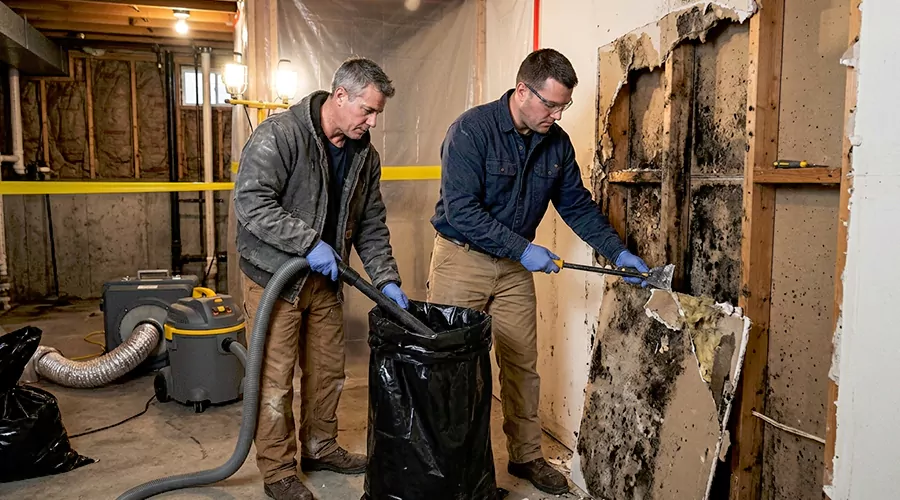
Black mold remediation is the controlled process of removing mold growth and correcting the moisture problem that allowed it to develop. In 2026, professional mold remediation commonly costs about $1,223 to $3,757 for many residential projects. Larger areas can cost $6,000 or more depending on the damage.
Black or greenish-black mold often appears after leaks or flooding. However, color alone can't confirm the mold species. The CDC also advises that identifying the exact type usually isn't necessary before cleanup because indoor mold growth should be removed regardless of species.
The most important part of remediation is moisture control. Removing visible growth without fixing the leak or humidity problem allows mold to return.
What Does Black Mold Remediation Mean?
Black mold remediation means controlling mold growth while addressing the water source behind it. The process can include inspection and containment before damaged materials are removed. Remaining surfaces are cleaned and dried before the area is repaired. Successful remediation also prevents spores from spreading into unaffected rooms.
The word remediation is broader than simply wiping mold from a surface. It deals with the conditions that allowed mold to grow in the first place.
A typical project includes:
- Find the moisture source.
- Determine how much material is affected.
- Isolate the work area when necessary.
- Protect occupants from contaminated dust.
- Remove materials that can't be cleaned.
- Clean salvageable surfaces.
- Dry the affected building materials.
- Correct the original moisture problem.
- Complete repairs after the area is dry.
Mold remediation and restoration may overlap when drywall or flooring must be rebuilt after contaminated materials are removed. The remediation phase deals with mold and moisture first. Restoration follows when damaged finishes need replacement.
Is Black Mold Different From Other Household Mold?
Black mold is commonly used to describe dark-colored mold and is often associated with Stachybotrys chartarum. However, many molds can appear dark or black. You can't reliably identify a species by color alone. Cleanup decisions should focus on moisture and the amount of growth rather than appearance.
Stachybotrys chartarum grows on materials containing cellulose when enough moisture is present. Common examples include drywall or fiberboard.
The CDC does not recommend treating Stachybotrys differently simply because it is called black mold. Other indoor molds should also be removed when they are growing inside a building.
Routine mold testing is usually unnecessary when visible mold is already present. Testing doesn't change the basic requirement to remove the growth and fix the source of moisture.
The practical lesson is to focus less on the color. Focus instead on why the material became wet and how much of the building is affected.
When Is Black Mold Remediation Needed?
Remediation becomes more appropriate when mold covers a large area or keeps returning after ordinary cleaning. Hidden growth inside walls can also require a more controlled approach. Mold following major water damage deserves closer attention because several materials may remain damp even after visible surfaces have dried.
The EPA uses the size of the affected area as one factor when deciding how mold cleanup should be handled.
- Less than about 10 square feet is considered a small area.
- About 10 to 100 square feet is considered a medium project.
- More than 100 square feet is considered a large project.
A small patch caused by normal bathroom humidity may sometimes be cleaned safely by a homeowner. A larger problem can require containment because disturbing mold can release particles into surrounding areas.
Water damage mold remediation becomes more important when mold follows a leak or flood. The visible growth may be only one part of the affected area because moisture can remain behind walls or beneath flooring.
Commercial mold remediation usually involves more planning when large occupied spaces are affected. The size of the building and the number of occupants can make containment more complicated.
What Causes Black Mold to Grow in a Home?
Black mold requires moisture to grow indoors. Water can come from plumbing leaks or roof failures. Condensation can also keep building materials damp enough for mold growth. Correcting the moisture source is therefore the main condition for preventing the same growth from returning.
Common causes include:
- A leaking pipe behind drywall
- Roof water entering the attic
- Basement moisture after heavy rain
- Condensation around cold surfaces
- Plumbing leaks below sinks
- Poor bathroom moisture control
- A previous flood that wasn't dried quickly
- Water trapped beneath flooring
- A leaking appliance connection
- Persistent indoor humidity
Water-damaged materials should generally be dried within 24 to 48 hours when possible. Mold can begin developing when porous surfaces stay damp for longer periods.
Water mold damage can also remain hidden. For example, a supply-line leak can wet the back of drywall while the painted side continues looking normal.
Cleaning up mold from water damage must therefore include finding where the moisture traveled. Treating only the visible patch can leave damp material behind.
What Are the Signs That Mold May Be Hidden?
Hidden mold often appears after a moisture problem even when large colonies aren't visible. A persistent musty smell can be an early clue. Paint changes or soft drywall can also indicate moisture behind a finished surface. Previous flooding should raise concern when the area wasn't dried quickly.
Watch for these signs:
- A musty smell remains in one room.
- Black or dark spotting returns after cleaning.
- Paint begins bubbling or peeling.
- Drywall becomes soft near a previous leak.
- Baseboards swell without an obvious spill.
- Flooring starts lifting near a wet area.
- Ceiling stains keep expanding.
- Mold appears around a wall opening.
- Indoor humidity stays unusually high.
- Carpet remains damp underneath.
- A room smells stronger after the HVAC starts.
- Mold appears soon after previous water damage.
Mold damage cleanup becomes harder when growth reaches concealed porous materials. Drywall can hide contamination on the back surface while only a small stain appears inside the room.
Don't cut into a wall merely to look for mold if significant contamination is suspected. Disturbing a hidden colony can release more particles into the occupied space.
How Does the Black Mold Remediation Process Work?
The remediation process follows a controlled sequence so moisture and contaminated materials are addressed before repairs begin. Containment may be used when disturbing mold could spread particles into nearby rooms. Damaged porous materials are then removed while salvageable surfaces are cleaned. Drying follows before reconstruction starts.
Step 1: Find the Moisture Source
The first task is identifying why mold is growing. Removing mold without correcting the moisture problem usually leads to another outbreak.
Possible sources include plumbing or roof leaks. High indoor humidity can also support recurring growth.
The source should be repaired before final reconstruction. Otherwise new drywall or flooring can become exposed to the same moisture.
Step 2: Determine the Size of the Affected Area
The visible mold patch doesn't always show the full extent of the problem. Moisture may have traveled behind drywall or beneath flooring before growth became obvious.
The EPA separates remediation projects into general size categories because larger areas require stronger containment and protective measures.
A small patch below 10 square feet can often be approached differently from an area covering an entire wall.
Step 3: Contain the Work Area
Containment reduces the movement of mold particles into unaffected parts of the building. This becomes more important as the affected area increases.
For areas between roughly 10 and 100 square feet, EPA guidance discusses limited containment. Larger areas can require full containment based on the conditions at the property.
Containment can include:
- Polyethylene barriers around the work zone
- Sealed openings around the affected area
- Restricted access during removal
- Controlled airflow when appropriate
- Protection for nearby clean surfaces
The HVAC system may also need to remain off when contamination could enter the air-handling system.
Step 4: Remove Materials That Cannot Be Saved
Porous materials can hold mold below the surface. Severely affected drywall or insulation may need removal because surface cleaning can't reach contamination inside the material.
Materials that may require removal include:
- Damaged drywall
- Saturated insulation
- Moldy carpet padding
- Swollen particleboard
- Heavily contaminated ceiling tiles
- Porous materials damaged beyond cleaning
Nonporous materials usually respond better to cleaning because growth remains closer to the surface.
The decision should consider contamination and physical condition. Material that has lost its strength may require replacement even after mold is removed.
Step 5: Clean Remaining Surfaces
Salvageable surfaces are cleaned after damaged materials have been removed. HEPA vacuuming can help capture fine particles from certain surfaces. Damp cleaning may also be used depending on the material.
Mold should be physically removed rather than simply covered with paint. Painting over active growth doesn't correct the underlying problem.
Water damage and mold cleanup can also involve removing remaining debris before detailed cleaning begins. This helps expose areas that still need drying.
Step 6: Dry the Area
Drying prevents the conditions that supported the original growth. Moisture readings can help determine whether drywall or wood remains wet after the visible surface appears dry.
Dehumidification may be needed when indoor humidity remains elevated. Air movement can also support drying when it can be used without spreading contamination.
Mold water remediation should address moisture before new finishes are installed. Rebuilding over damp material can recreate the same problem inside a closed wall.
Step 7: Repair the Damaged Area
Repairs begin after the source is corrected and the affected materials are dry. New drywall or flooring may be installed when original materials couldn't be saved.
Mold damage restoration can range from minor patching to larger reconstruction. The amount of rebuilding depends on how deeply mold or moisture affected the property.
The repaired area should remain dry after work is complete. Returning moisture is a warning that the original cause hasn't been fully corrected.
What Can Be Cleaned and What Usually Needs Replacement?
Hard nonporous materials are generally easier to clean than absorbent materials because mold tends to remain on the surface. Porous materials can hold growth inside their structure. The amount of contamination also matters. Heavy growth can make replacement more practical even when a material might otherwise be cleanable.
| Material | Often Cleanable | Replacement More Likely |
|---|---|---|
| Glass | Yes | Rarely needed for mold alone |
| Metal | Yes | If physically damaged |
| Ceramic tile | Often | If underlying materials are affected |
| Solid wood | Sometimes | If deeply damaged or deteriorated |
| Drywall | Limited cases | When heavily moldy or weakened |
| Insulation | Limited | When heavily contaminated |
| Carpet padding | Limited | When contaminated or saturated |
| Particleboard | Rarely after heavy exposure | When swollen or moldy |
| Ceiling tile | Limited | When porous material is heavily affected |
Black mold removal isn't complete just because the dark color is gone. The material must also be clean enough for reuse and the moisture condition must be corrected.
The biggest mistake is rebuilding too soon. A new wall installed over damp framing can hide the moisture while providing another surface for growth.
How Much Does Black Mold Remediation Cost in 2026?
Black mold remediation cost depends mainly on the size and location of the affected area. In 2026, Angi reports that many professional mold remediation projects cost about $1,223 to $3,757. HomeGuide places average mold remediation at roughly $15 to $30 per square foot or $1,500 to $6,000 total.
Larger problems cost more because containment and material removal become more involved.
| Project Size | Typical 2026 Cost |
|---|---|
| Small localized area | About $500 to $1,500 |
| Medium affected area | About $1,500 to $6,000 |
| Large affected area | About $6,000 to $15,000 |
| Whole-house problem | About $15,000 to $30,000 |
Location also changes the price. A visible patch on an accessible bathroom wall usually costs less to address than growth inside an attic or HVAC system.
Repairs can increase the final total. Drywall or insulation may need replacement after remediation if the original materials can't be saved.
The lower-cost approach isn't always the one that removes the least material. Leaving contaminated porous material in place can lead to another remediation project later.
Can You Remove a Small Area of Mold Yourself?
A small mold area of less than about 10 square feet can often be handled by a homeowner according to EPA guidance. The moisture source must be easy to identify and correct. DIY cleanup isn't suitable for every situation. Large growth or contaminated water can require professional controls.
Before attempting a small cleanup:
- Confirm that the water source has stopped.
- Keep children away from the work area.
- Wear gloves during cleanup.
- Protect your eyes from particles.
- Use at least an N95 respirator when disturbing mold.
- Avoid mixing cleaning chemicals.
- Follow product safety instructions.
- Dry cleaned surfaces completely.
People with asthma or significant respiratory conditions should avoid mold cleanup. The CDC also advises extra caution for people with immune suppression.
Never mix bleach with ammonia or another cleaner. The resulting gas can be dangerous.
Home testing isn't usually required before cleaning obvious mold. The CDC does not recommend routine mold testing because there are no health-based indoor standards that define a safe number of mold spores.
When Should You Call a Mold Remediation Professional?
Professional help is appropriate when mold covers more than about 10 square feet or follows major water damage. Growth inside wall cavities can also be difficult to contain safely. Sewage-related moisture creates another clear reason for trained cleanup. Large projects need controls that small household cleanup usually doesn't provide.
Consider professional help when:
- Mold covers more than about 10 square feet.
- Several rooms show signs of growth.
- Mold keeps returning after cleaning.
- A wall cavity appears affected.
- The HVAC system may contain contamination.
- Sewage caused the original water damage.
- Floodwater entered the property.
- Structural materials are badly damaged.
- Large sections of drywall need removal.
- The moisture source can't be identified.
- Occupants have health concerns related to exposure.
- The affected area exceeds what you can safely contain.
A mold remediation specialist can assess the extent of the affected area before removal begins. Professional equipment can also help control particles during larger projects.
A mold remediation service may use HEPA filtration and containment based on project conditions. The goal is to remove contaminated material without spreading the problem into clean parts of the home.
How Can You Prevent Black Mold From Returning?
Mold prevention depends on controlling moisture because mold can't continue growing without a damp environment. Fix plumbing leaks quickly and dry wet materials within 24 to 48 hours. Indoor humidity should stay below 60 percent when possible. Preventing another moisture problem is more effective than repeatedly cleaning the same surface.
Use this maintenance routine:
- Check plumbing connections each month for moisture.
- Repair roof leaks as soon as they appear.
- Inspect ceilings after severe storms.
- Run bathroom exhaust fans during showers.
- Vent clothes dryers outdoors.
- Keep indoor humidity below 60 percent.
- Dry wet carpet quickly after a spill.
- Check basement walls after heavy rainfall.
- Investigate musty odors instead of masking them.
- Keep gutters clear enough to drain properly.
- Direct downspouts away from the foundation.
- Check previously affected areas for returning moisture.
Water and mold mitigation should begin as soon as an unexpected leak occurs. Fast drying can prevent a water problem from becoming a mold problem.
The strongest prevention step is correcting the source rather than repeatedly treating the surface. If mold returns in the same location, there is usually still a moisture condition that needs attention.
Conclusion
Black mold remediation removes indoor mold while correcting the moisture condition that allowed it to grow. Small areas may sometimes be cleaned safely at home while larger or hidden problems need stronger containment. The mold's color matters less than the size of the affected area and the water source. This week, inspect any room with a musty odor for leaks or persistent moisture.
Frequently Asked Questions
Is all black-colored mold Stachybotrys?
No. Several mold species can appear dark or black. Visual appearance alone isn't enough to identify the exact species.
Does black mold always need testing before removal?
No. Routine testing usually isn't needed when mold is already visible. The CDC recommends removing indoor mold regardless of its specific type.
Can you paint over black mold?
No. Paint can hide discoloration without removing mold growth or correcting the moisture source. The affected surface should be properly cleaned or replaced first.
How quickly can mold grow after water damage?
Mold can develop when materials remain damp for an extended period. Wet materials should generally be dried within 24 to 48 hours when possible.
Can black mold come back after remediation?
Yes, if the moisture source returns or wasn't corrected. Keeping the repaired area dry is the main defense against recurring growth.
Does homeowners insurance cover mold remediation?
Coverage depends on what caused the mold. Some policies may cover remediation when mold results from a covered sudden water loss while long-term moisture problems may be excluded.